Collector's note: The story that follows marks an important milestone in the early history of the TC, and I deeply regret having parted with this remarkable set of St. Michel meteorite fragments. I have since lost track of the buyer and would love to find these specimens again and, if possible, bring them back into the TC. If they are still in your possession, I would be delighted to hear from you.
THE ST. MICHEL METEORITE, THE FINNISH NATURAL HISTORY MUSEUM, AND THE HUNT OF THE MISSING PIECE
Reproduced from the Historical Investigations section of the former website www.thetricottetcollection.com (with typographical errors corrected).
Created: 4 June 2011 - Last update: 6 July 2013
A COSMIC PUZZLE
The story starts in early 2006 when I spotted a fragment of the rare St. Michel meteorite, a 1910 Finnish fall, on an online auction site. What immediately attracted my attention was one particular line from the descriptive text which indicated that this fragment originated from the Helsinki Natural History Museum (Helsingin Yliopisto Kivimuseo, HYK). At that time, I was unaware that a space rock, or any naturalia, could have any historical appeal in addition to its potential aesthetic and scientific interest. Looking back at that period, it is clear that this particular specimen played a role in the direction that The Tricottet Collection took since then1 - I bid and won the St. Michel meteorite - It was an elongated fragment, showing some fresh crust on a side and weighting c. 16 grams (Fig. 1). But only a few minutes after I won this specimen, a second St. Michel meteorite fragment, slightly bigger, and to my amazement with a small painted identifier, appeared on the auction site. The identifier, B5099, was neatly painted in white on a background of azure colour paint, and looked like the signature that a sculptor would have left on this natural piece of art (Fig. 2). I lost this second auction. It is at that moment that my surprise faded away to be quickly replaced by disappointment, a feeling associated to the St. Michel meteorite that lasted for almost five years...
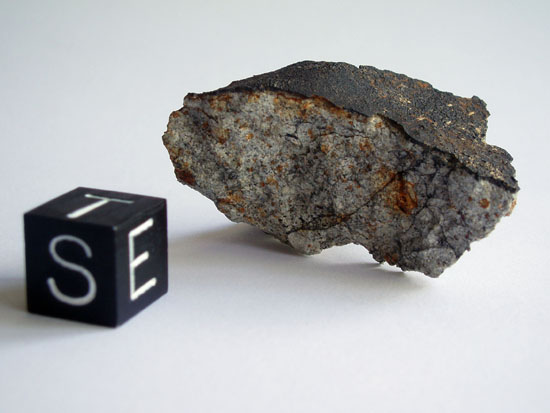
Fig. 1. St. Michel meteorite fragment from a larger mass formerly de-accessioned from the Finnish Natural History Museum, Helsinki (16.1 grams).
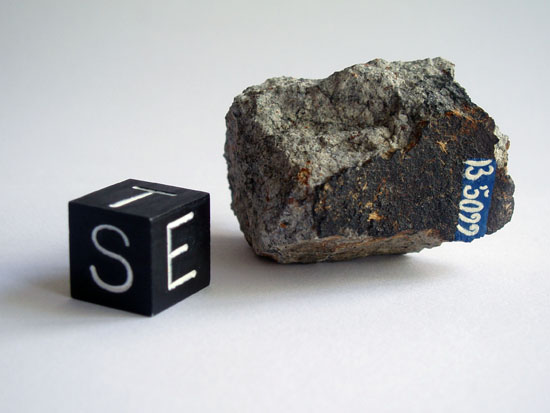
Fig. 2. Another crusted fragment from the same larger mass, formerly de-accessioned from the Finnish Natural History Museum. This specimens carries the number B5099 painted in white over an azure background, which is typical of inventory numbers from the Finnish Natural History Museum (21.8 grams).
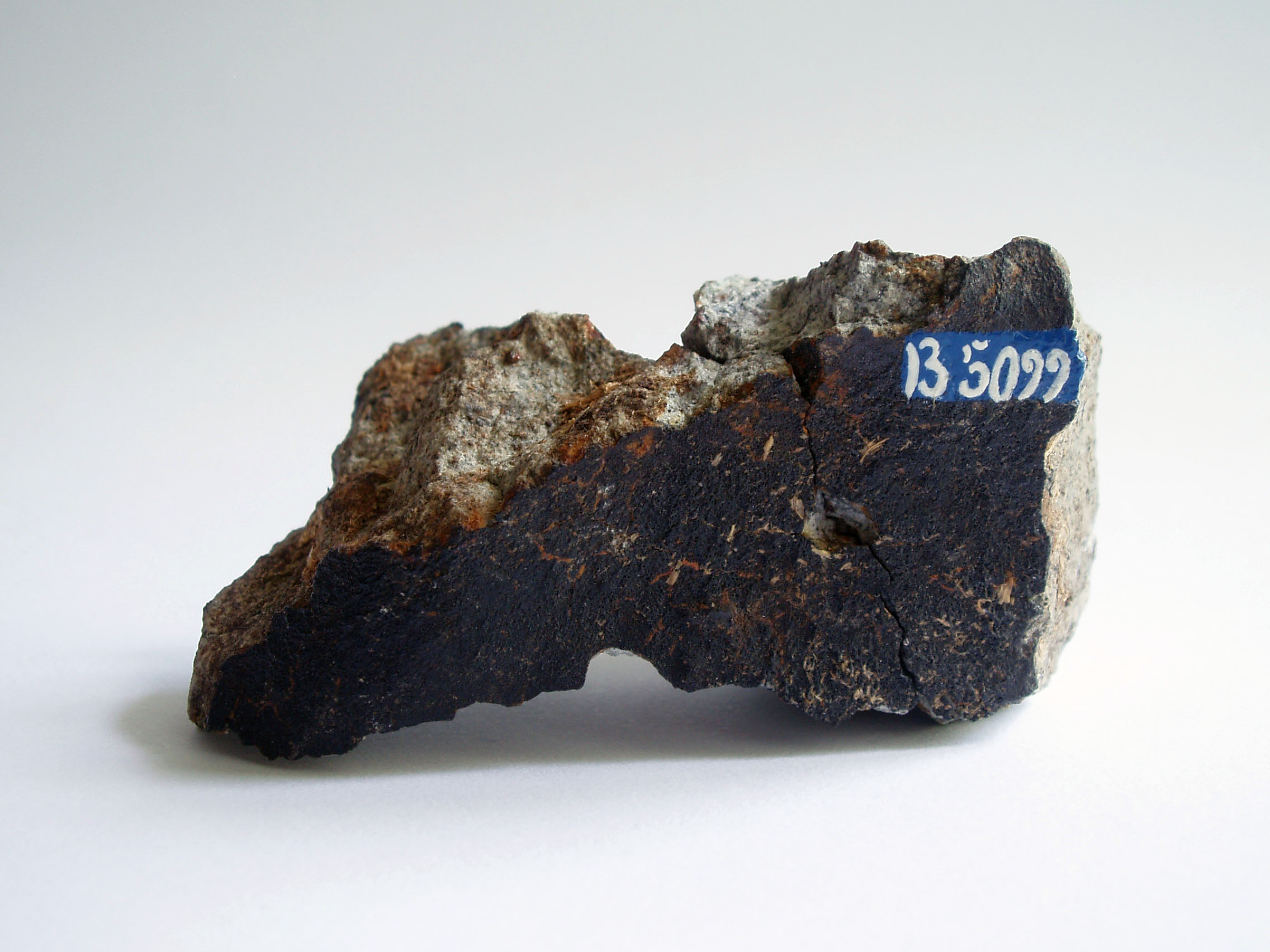
Fig. 3. The current St. Michel meteorite 2-piece puzzle (37.9 grams).
I learned some time later that the painted fragment had been purchased by Peter Marmet, owner of a renowned collection of historic meteorites. Although many collectors would recognise the 16 gram fragment as a very correct representative of the St. Michel meteorite, for me it was missing this small piece of paint. As a consequence, I didn't even give it a proper Tricottet Collection inventory number and it went straight to the trade box. In 2009, it was traded, the story was over, or at least this is what I thought.
It is only in early 2011 that St. Michel was back on my mind, learning that Peter Marmet was making the fragment with the museum number available for sale. I could not miss the opportunity and was lucky enough to finally add the 22 gram fragment to the Tricottet Collection, entry number TC88.12. The first thing that struck me was the beauty and elegance of the small Finnish Natural History Museum identifier. Martin Horejsi described perfectly numbers from the Helsinki collection as "white clouds [... that] float gently in the painted blue sky background, with each brush stroke a careful precise addition to the history of [...] the stone" (Accretion Desk, Nov. 2004).
I then remembered what the seller of the two St. Michel meteorite fragments told me back in 2006. He had broken the original fragment, a violent act that I could not comprehend, but common practice in the meteorite business to increase profit but possibly also to make rare specimens available to more collectors3. I wondered if the shape of the fragment I had for some years would match the shape of the one I had recently acquired. Again I was quite fortunate since the person to whom I traded it still had it in his collection and agreed to trade it back. Here was specimen TC88.22! As can be seen from Figure 3, the 2 fragments form a perfect puzzle. Rapid visual inspection shows that this cosmic puzzle is still incomplete, with at least one internal fragment missing (Fig. 4). One can even see the circular pit where the tool used to break the original mass penetrated and we can only wonder if the semi-circular chip at the bottom of the specimen on Figure 3 is not due to the same tool. The hunt continues to find more pieces and I am still waiting to hear from the 2006 seller to know if he remembers how many fragments were obtained after breaking down the original mass.
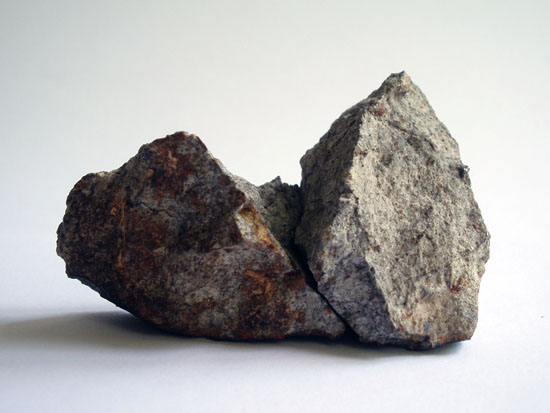
Fig. 4. At least one internal fragment is still missing to complete this cosmic puzzle.
CHAIN-OF-CUSTODY INVESTIGATION
What is currently known about the chain-of-custody of these St. Michel specimens is that the 2006 seller obtained the original St. Michel specimen from a trade with Tony Nikischer from Excalibur Mineral Corp. in the mid-1990s4. Nikischer obtained it directly from Dr. Martti Lehtinen, at the time curator of the Finnish Natural History Museum. Unfortunately, Excalibur Mineral Corp. did not keep any record of that trade. I am now also waiting to hear from the museum of Helsinki in the hope to find some references where the specimen B5099 would have been described. At present, I am not aware of any catalogue published for that collection, although it is quite certain that such a catalogue exists. Until some new information comes to light, if you have a fragment of the St. Michel meteorite purchased after 2006 (and which might be a piece of the puzzle) or if you know about a catalogue of the Finnish Natural History Museum meteorite collection, please contact The Tricottet Collection. Any information would be highly appreciated.
REFERENCES
Borgström, L. H. (1912), Der Meteorit von St. Michel. Bull. Commission Géologique de Finlande, No. 34, Helsingfors, 49 pp., 3 pls.
FOOTNOTES
- 1. In fact, an Holbrook meteorite pea with painted number from the AMNH was once part of the Tricottet Collection, well before the collection got its official name. It had been purchased in the 1990s but sold around 2000 with all other specimens of the "pre-TC" meteorite collection to a same French collector.
- 2. This cataloguing method has been abandoned in early 2013.
- 3. See related write-up Fighting Entropy, or the Life of a Natural History Curator, Historical Investigations, no. 4
- 4. As of 2012, the Tricottet Collection counts a Toluca specimen deaccessioned from the Finnish NHM (with original label! and painted number A2388). This specimen is also accompanied by a label from Excalibur Mineral Corp indicating that this dealer traded several specimens with Helsinki.